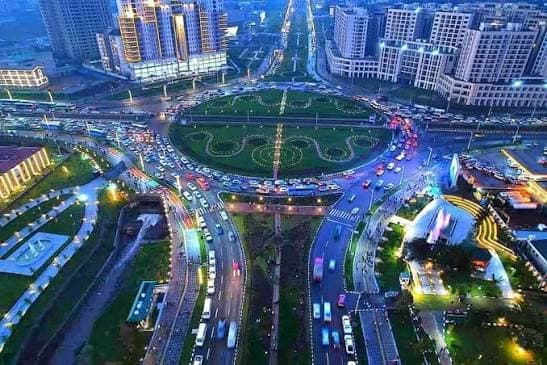
A City Going Viral
Something unusual is happening with Addis Ababa. The city keeps showing up in places it never used to: TikTok compilations of African skylines, architecture Twitter threads, drone footage on YouTube that racks up millions of views, diaspora group chats buzzing with “have you seen what they're building?”
Addis Ababa has always been Africa's diplomatic capital — home to the African Union, the UN Economic Commission for Africa, and over 130 embassies and international organizations. But the physical city never quite matched the political weight. The roads were congested. The riverbanks were neglected. The infrastructure lagged decades behind the ambition.
That is changing — fast, visibly, and at a scale that is generating both genuine excitement and legitimate controversy.
This article examines the major urban renewal projects reshaping Addis Ababa, the international response, the criticisms, and what all of it means for property values and investment decisions.
The Corridor Development Project
The corridor development project is the most visible and most ambitious of Addis Ababa's transformation initiatives. It involves the comprehensive redesign of the city's major road networks — not just repaving, but complete reconstruction with modern drainage, underground utilities, dedicated pedestrian zones, cycling lanes, landscaping, and architectural lighting.
Phase One: The Proof of Concept
The first phase covered approximately 34 kilometers of roads within Addis Ababa proper. The showcase corridors include the stretch from Meskel Square through Bole to the airport, the La Gare to Mexico Square route, and several connecting arterials. These weren't surface-level cosmetic upgrades — they involved tearing up existing roads, installing modern drainage and utility infrastructure, and rebuilding from the ground up with wide sidewalks, median landscaping, roundabout features, and coordinated building facades.
The results, particularly along the Bole corridor, drew immediate international attention. The before-and-after comparisons went viral. What had been a congested, potholed stretch became a boulevard that foreign visitors compared to Gulf-state infrastructure projects — but with distinctly Ethiopian architectural elements and greenery.
Phase Two: Scaling Up
Phase two, announced in late 2025 and currently underway, expands the program to 132 kilometers — nearly four times the original scope. This phase extends the corridor treatment to secondary roads, commercial districts, and previously underserved neighborhoods. The Addis Ababa City Administration has framed this as the phase that transforms corridor development from a showcase project into a citywide standard.
kilometers of corridor development in phase two — nearly 4x the original scope
Addis Ababa City Administration
Beyond Addis: The Regional Expansion
The corridor model has expanded beyond the capital. Regional cities including Hawassa, Bahir Dar, Adama, Jimma, and Dire Dawa have launched their own corridor projects, adapting the Addis template to local contexts. The federal government has framed this as part of a broader national urban modernization strategy, with the goal of raising infrastructure standards across Ethiopia's major urban centers.
The funding model combines government budget allocation, public-private partnerships, and contributions from the business community. The city administration reports that Addis Ababa has attracted approximately 1.56 trillion birr in PPP investment for urban development projects since 2018.
in PPP investment attracted to Addis Ababa for urban development
Addis Ababa City Administration
Beautifying Sheger: Rivers to Green Corridors
“Sheger” is the affectionate local name for Addis Ababa. The Beautifying Sheger initiative focuses on transforming the city's neglected waterways — the Kebena, Bantyiketu, and Little Akaki rivers that flow through the capital — from polluted, trash-filled channels into landscaped green corridors with walking paths, public seating, playgrounds, and recreational facilities.
For decades, Addis Ababa's rivers were effectively open sewers — dumping grounds for waste with informal settlements crowding the banks. Beautifying Sheger has cleared and rehabilitated significant stretches, creating linear parks along the riverbanks that provide the city's first real public green spaces accessible to ordinary residents.
The project incorporates flood management infrastructure alongside the aesthetic improvements. During Addis Ababa's heavy rainy season (June through September), flooding has historically caused significant damage and displacement. The engineered riverbank channels are designed to manage water flow while maintaining the parkland character during dry months.
The impact on adjacent neighborhoods has been notable. Areas along the rehabilitated riverbanks that were previously avoided are seeing new commercial activity, foot traffic, and, predictably, rising property interest.
The Parks: Unity, Entoto, and Friendship
Unity Park
Unity Park occupies the grounds of the former imperial palace compound — a site that was off-limits to the public for over a century. Opened in 2019, it includes restored palace buildings, a zoo, indigenous gardens representing Ethiopia's regional diversity, a man-made lake, children's play areas, and exhibition spaces. It has become one of Addis Ababa's most visited attractions, drawing both domestic visitors and international tourists.
Entoto Park
Entoto Park sits on the Entoto Mountains overlooking Addis Ababa — the historic site where Emperor Menelik II founded the modern city. The park development transformed eucalyptus forest and degraded land into a mountain recreation area with viewpoints, walking trails, a cultural museum, and event spaces. At over 3,000 meters elevation, it offers panoramic views of the entire city and has become a popular weekend destination.
Friendship Park
Friendship Park, located near the Bole area, was designed as an urban green space focused on recreation and community gathering. It features open lawns, a running track, outdoor fitness equipment, event pavilions, and food courts. The park fills a critical gap — Addis Ababa has historically had very little accessible public green space relative to its population.
Together, these three parks represent a deliberate attempt to create public amenities that serve residents across income levels — a significant departure from the historical pattern where public spaces in Addis were either nonexistent or inaccessible.
The Green Legacy: 47.5 Billion Trees
The Green Legacy Initiative, launched in 2019, is a national tree-planting campaign that the government reports has planted over 47.5 billion seedlings across Ethiopia. The initiative mobilizes mass planting events — Ethiopia claims its own world record of 350 million trees planted in a single day in 2019.
trees planted under the Green Legacy Initiative since 2019
Ethiopian Government, Green Legacy Initiative
Within Addis Ababa, the Green Legacy manifests as aggressive urban greening — tree-lined corridors, park plantings, and the integration of indigenous species into all new public infrastructure. The city that was once notoriously dusty and gray is becoming visibly greener.
Independent assessments of the survival rate and ecological impact vary. Some environmental organizations have noted that seedling survival rates can be low without sustained maintenance, and that the headline numbers may overstate the actual forest coverage gain. But the directional impact — visible greening of both urban and rural landscapes — is difficult to dispute, particularly in Addis Ababa where the change is photographic.
Gebeta Le Hager: Crowdfunding a City
“Gebeta Le Hager” (meaning “a plate for the nation”) is a fundraising mechanism that invites Ethiopians — both domestic and diaspora — to contribute directly to urban development projects. The model uses charity dinners, galas, telethons, and direct donation platforms to fund specific infrastructure improvements.
The approach is distinctly Ethiopian — combining traditional communal contribution culture (similar to idir and iqub traditions) with modern fundraising techniques. Events feature performances by popular artists, appearances by public officials, and live pledging that can generate significant sums in a single evening.
Critics have raised questions about transparency and accountability — specifically, whether funds are tracked to their stated purpose and whether the fundraising model creates implicit pressure on business owners to contribute. Supporters counter that the model enables projects that government budgets alone could not fund and creates genuine public ownership of urban improvements.
What Diplomats Are Saying
The international diplomatic community based in Addis Ababa has taken visible notice of the transformation. Several ambassadors and international officials have made public statements:
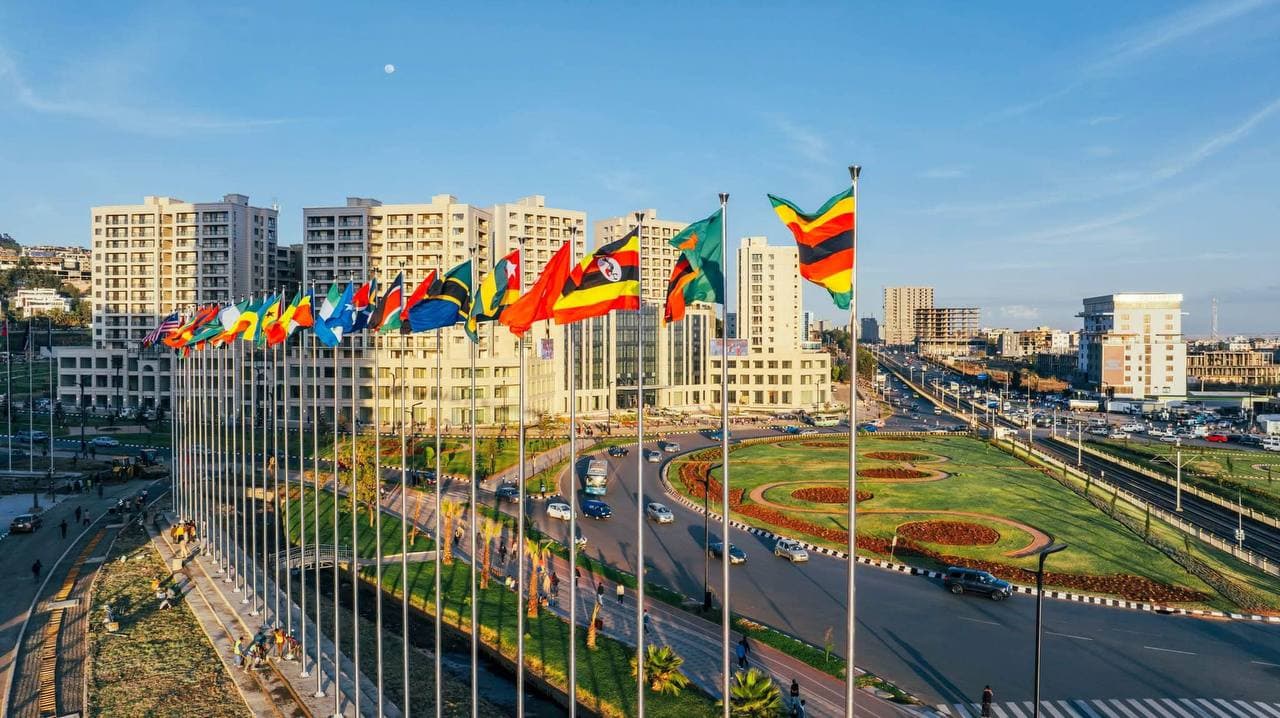
African flags along one of Addis Ababa's transformed corridors
“What Ethiopia is doing with urban renewal deserves attention. The corridor development is genuinely impressive infrastructure work.”
The African Union itself, headquartered in Addis Ababa, has acknowledged the improvements to the city's infrastructure as enhancing its role as Africa's diplomatic hub. For an organization that hosts continental summits attended by every African head of state, the quality of the host city's infrastructure matters practically and symbolically.
International media coverage has increased significantly. CNN, Al Jazeera, the BBC, and regional outlets like The Africa Report have published features on Addis Ababa's transformation. Social media amplification — particularly drone footage and before-and-after comparisons — has given the projects visibility that far exceeds traditional media reach.
Find Your Next Investment
Explore beta property listings in Bole, CMC, Ayat, and more. Sample content is labeled; confirm current availability.
Browse Properties →The Other Side: Displacement, Criticism, and What Gets Left Out
No honest assessment of Addis Ababa's transformation can ignore the human cost. The projects have faced significant criticism from human rights organizations, urban planning experts, and affected communities.
Displacement
Amnesty International and other organizations have documented forced evictions and displacement associated with Addis Ababa's urban renewal. Residents of informal settlements along river corridors and in the path of road expansions have been relocated, often with inadequate compensation or alternative housing. The Human Rights Watch has raised concerns about due process in eviction proceedings and the adequacy of relocation support.
The scale of displacement is difficult to quantify precisely. Some estimates suggest tens of thousands of households have been affected across all projects. Many of those displaced are among the city's poorest residents — the people least equipped to absorb the shock of forced relocation and least likely to benefit from the property value increases that follow infrastructure improvement.
The Gentrification Question
Urban renewal that displaces poor residents and raises property values for wealthier buyers is, by definition, gentrification. The pattern is global — from Brooklyn to Nairobi to Addis Ababa. The question is whether the benefits of improved infrastructure can be distributed broadly enough to offset the displacement costs.
The government's response has included condominium housing programs for relocated residents and commitments to inclusive development. Whether these programs are adequate in scale and execution is a matter of active debate.
Transparency and Accountability
Questions about procurement transparency, project cost overruns, and the allocation of contracts have been raised by both domestic commentators and international observers. In a context where press freedom faces constraints, independent auditing of major infrastructure spending is limited.
For property buyers and investors, these issues matter practically, not just ethically. Political sustainability of development projects, community acceptance, and the risk of policy reversals all affect long-term property values. A buyer investing in a neighborhood that was cleared of informal settlements should understand both the opportunity and the context.
What This Means for Property
The urban renewal projects are having measurable effects on Addis Ababa's property market:
price increases along newly upgraded corridor routes
Market Research and Agent Reports
- •Corridor-adjacent properties are seeing 15-20% price increases as completed roads improve accessibility, reduce commute times, and raise the perceived quality of the neighborhood.
- •Riverbank-adjacent areas that were previously avoided are attracting new interest from both commercial and residential buyers following Beautifying Sheger improvements.
- •Park proximity is becoming a pricing factor. Properties near Unity Park, Friendship Park, and the Entoto area are marketing their location relative to these amenities — a dynamic that didn't exist five years ago.
- •Phase two corridors represent a potential early-mover opportunity. If phase one is any guide, neighborhoods that will receive corridor treatment in phase two may see appreciation before construction is complete, as buyers anticipate the infrastructure improvement.
- •Commercial property along completed corridors is attracting retail, hospitality, and office tenants who previously concentrated in Bole. The geographic distribution of premium commercial space is expanding.
The risk factors are equally real: projects may stall or face budget constraints, displacement-related community pushback could affect specific neighborhoods, and the macroeconomic environment (currency, inflation, political stability) remains the dominant variable for all Ethiopian real estate.
Talk to a Verified Agent
Connect with licensed agents on Telegram. Ask questions, schedule viewings, get honest answers.
Chat on Telegram →Explore Properties in the New Addis Ababa
Sample listings across Addis Ababa's transforming neighborhoods

The Big Picture
Addis Ababa is attempting something that very few African cities have done: a comprehensive, simultaneous upgrade of roads, public spaces, green infrastructure, and urban amenities across an entire metropolitan area. The closest comparisons might be Kigali's transformation under Rwanda's Vision 2020 or Dubai's infrastructure build-out — though the scale, context, and constraints are very different.
The projects are real. The physical changes are documented and visible. The international attention is genuine. And the property market effects are measurable.
But so are the costs — in displacement, in questions about transparency, and in the fundamental tension between building a showcase city and ensuring that the city's poorest residents share in the benefits.
For property buyers, the takeaway is nuanced: Addis Ababa's infrastructure is genuinely improving, and those improvements are creating real value in specific locations. But the market context — limited price transparency, no centralized listing system, currency volatility, and the social costs of rapid development — requires the same careful diligence that any emerging market demands.
The city is changing. The question for buyers is whether they have the information and verification they need to participate wisely.
GuzoHomes Research
GuzoHomes is building a beta AI-powered real estate platform for Ethiopia — connecting diaspora buyers, local users, and property professionals through clearer property data.
Sources
African Union | UN Economic Commission for Africa | Addis Ababa Corridor Development Phase Two | Beautifying Sheger | Unity Park | Entoto Park | Green Legacy Initiative | Gebeta Le Hager | Amnesty International — Addis Ababa Forced Evictions | Human Rights Watch — Ethiopia | The Africanvestor — Addis Ababa Price Forecasts | Ethiopia Property Centre
GuzoHomes is Ethiopia's AI-powered real estate platform, currently in development. Browse properties at guzohomes.com or search listings through our Telegram bot.
Disclaimer: This article is for informational purposes only and does not constitute investment advice. Real estate transactions in Ethiopia involve significant risk, including displacement of existing communities, political uncertainty, and limited market transparency. The urban renewal projects described in this article have been associated with forced evictions and community displacement — property buyers should consider the social context alongside investment potential. Buyers should conduct independent due diligence and consult qualified legal and financial professionals before making any investment decision.